James Jamshed(JJ)
Thinker, Political Enthusiast & Writer of 100 Books
As the world steps deeper into the 2020s, global politics appears more fragmented, volatile, and unpredictable than at any point since the Cold War. The traditional architecture of power, long dominated by Western-led alliances, is now being challenged on multiple fronts—from the rise of China’s assertive diplomacy to the Global South's demand for a more equitable world order.
The world is no longer unipolar, and it’s not yet stable in multipolarity either. Instead, we find ourselves in a fluid, contested phase—a transition toward a yet undefined balance of power.
The West, led by the United States and Europe, is grappling with internal polarization, economic uncertainty, and declining moral authority on the global stage. From the wars in Iraq and Afghanistan to the handling of the Israel-Palestine conflict, the West's perceived double standards have eroded its legitimacy in the Global South.
Meanwhile, China continues to project influence through its Belt and Road Initiative (BRI), digital infrastructure diplomacy, and strategic investments in Africa, Latin America, and Southeast Asia. Russia, despite sanctions and isolation, has proven that military assertiveness and resource leverage can still reshape geopolitics, as seen in Ukraine and the broader Eurasian region.
The BRICS alliance—Brazil, Russia, India, China, and South Africa—has morphed from a loose economic concept into a political alternative to Western dominance. Recent expansions, including countries like Iran and Saudi Arabia, signal a growing coalition that aims to challenge the dollar-based economic system and push for a multipolar world.
This bloc isn’t ideologically unified, but it reflects a shared desire for sovereignty, economic independence, and reform of global institutions like the IMF, World Bank, and United Nations.
Technological dominance is now a central axis of global power. The U.S.-China tech rivalry, especially over semiconductors, AI, and 5G networks, signals a new form of Cold War—one defined not just by ideology, but by control over innovation, data, and digital infrastructure.
Countries are increasingly being pressured to choose sides in this techno-political divide. Meanwhile, cyberwarfare, misinformation, and surveillance have become the weapons of choice in a shadowy battlefield where traditional diplomacy has little sway.
Perhaps the most consequential development is the awakening of the Global South. Countries like Indonesia, Nigeria, Bangladesh, Mexico, and Turkey are asserting their roles not as pawns but as players in global decision-making.
This movement is less about aligning with either the West or East and more about demanding respect, equity, and voice. The call for climate justice, fair trade, and technology transfer is growing louder—and global forums like COP, G20, and UN summits must now listen.
The world faces multiple high-risk flashpoints: Taiwan, the South China Sea, Iran-Israel tensions, and the future of NATO in Eastern Europe. These are not isolated issues—they are interconnected tests of whether global diplomacy can prevent the outbreak of large-scale conflict.
Conclusion:
The post-Cold War dream of a peaceful, rules-based international order is fading. What replaces it is still unclear. But one thing is certain: the era of Western monopoly in global politics is ending, and the world is entering an era of contestation, negotiation, and power recalibration.
The question is not just who will lead the world, but what kind of world will be led. Will we see cooperation or confrontation? Inclusion or division? The answers depend not just on superpowers, but on how the emerging voices of the Global South shape the next chapter of global history.
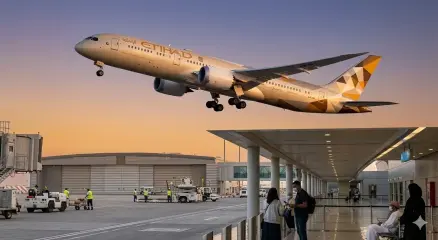
Abu Dhabi — March 6, 2026 Partial Operations Restart After Week-Long Shutdown Etihad Airways has partially resumed commercial operations from Abu Dhabi International Airport, marking the first significant return to scheduled service after nearly a week of complete shutdown triggered by the escalating conflict between Iran, Israel, and the United States. 25 Destinations Back on the Map The UAE's flag carrier confirmed it will operate a limited schedule between March 6 and March 19, serving 25 international destinations across Europe, Asia, the Middle East, and the United States. Routes include London Heathrow, Frankfurt, Madrid, Milan, New York, Delhi, Mumbai, Bangkok, Kuala Lumpur, Cairo, and Jeddah, among others. The airline stressed that all remaining scheduled services stay suspended, and that flights will only operate once all safety criteria are fully met. GCAA Green-Lights Exceptional Operations The resumption follows approval from the UAE's General Civil Aviation Authority (GCAA), which cleared "exceptional" flight operations across Abu Dhabi, Dubai, and Sharjah airports to assist stranded passengers. The GCAA had previously confirmed that 17,498 passengers were returned on 60 repatriation flights, with plans to scale to 80 flights per day in the next phase. Passengers Advised Not to Head to Airport Without Confirmation Etihad urged travellers not to proceed to the airport unless directly contacted by the airline or holding a confirmed booking on a resumed flight. Due to high call volumes, the airline has directed passengers to manage rebookings and refund requests through etihad.com. Free Rebooking and Refunds Available Passengers holding Etihad tickets issued on or before February 28, 2026 — with original travel dates up to March 21 — may rebook free of charge on any Etihad-operated flight until May 15, 2026. Full refunds are also available via etihad.com. Emirates and flydubai Also Restarting Fellow UAE carriers Emirates and flydubai have begun phased resumptions in parallel. Emirates announced over 100 daily departures on March 5 and 6, while flydubai resumed select scheduled routes from March 5, signalling a broader, cautious return to normalcy across the UAE's aviation sector. Situation Remains Fluid Despite the partial restart, airspace conditions across the region remain subject to rapid change as missile activity continues. Passengers are strongly advised to monitor official airline channels before travelling.
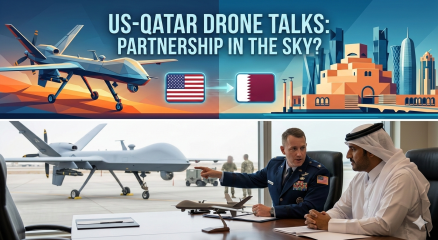
The United States and Qatar are in early-stage discussions with Kyiv about acquiring Ukrainian-made interceptor drones as a cost-effective alternative to counter the waves of Iranian Shahed UAVs targeting Gulf states, according to sources familiar with the matter. The talks are taking place between government officials — not private companies — and the technology under discussion includes systems designed to detect incoming enemy drones and disrupt their communication signals. Qatar's International Media Office did not respond to a request for comment, and the Pentagon declined to address the matter publicly. A Ukrainian delegation traveled to Doha this week to meet with Qatari officials and share Ukraine's experience in drone defense, according to a Western diplomat based in the Gulf. A separate delegation also visited Abu Dhabi for similar discussions. Ukrainian President Volodymyr Zelenskyy confirmed that Washington had formally requested Kyiv's assistance in countering Shahed drones, stating he had "instructed that the necessary resources be provided and that Ukrainian specialists be present." The urgency of the talks stems from an acute cost imbalance on the battlefield. A single Iranian Shahed drone costs approximately $30,000 to produce, while a PAC-3 Patriot interceptor missile — the primary defense currently deployed by Gulf states — costs over $13.5 million per unit. Since the U.S.-Israeli strikes on Iran began, Gulf nations have expended hundreds of these high-value missiles, and stockpiles are diminishing. By contrast, Ukraine has pioneered mass-produced interceptor drones costing only a few thousand dollars each, honed through four years of countering Russian Shahed swarm attacks. Britain is also playing a supporting role, with a third source indicating London is backing Ukraine in its early-stage talks with Gulf partners. Some interceptor drones could potentially be supplied through Project Octopus, an existing joint drone production venture between the United Kingdom and Ukraine, though the manufacturer declined to comment. Zelenskyy, who confirmed he had spoken with leaders of Qatar, the UAE, Bahrain, Jordan, and Kuwait, framed Ukraine's cooperation as conditional — stressing that any technology transfer must not compromise Ukraine's own defense capabilities. He has also reportedly proposed offering Kyiv's drone expertise to Gulf leaders in exchange for their diplomatic influence in securing a ceasefire with Russia. Operational challenges remain. A representative from Come Back Alive, a Ukrainian foundation that has procured tens of thousands of interceptor drones, cautioned that it would be difficult to redeploy trained Ukrainian operators to the Middle East given frontline demands at home, noting a significant need to scale up training for partner nations. Source: Reuters
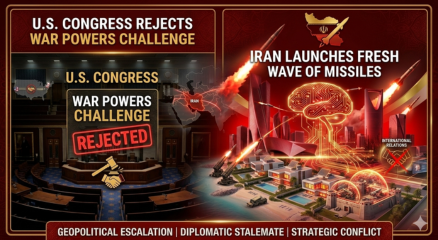
Iran escalated its retaliatory campaign on Thursday, unleashing a renewed barrage of missiles and drones across the Persian Gulf region, as the United States Congress voted to continue supporting the Trump administration's military offensive against Tehran without requiring prior congressional authorisation. Heavy waves of missile and drone strikes were reported across multiple Gulf states, including Azerbaijan, Saudi Arabia, and the United Arab Emirates, as Iran intensified retaliatory operations that had appeared to ease in recent days. The fresh assault came as the U.S. House of Representatives rejected a bipartisan measure intended to halt further American military action in Iran, voting 219–212 against the bill. A day earlier, the Senate voted 47 to 53 to defeat a resolution that would have required President Donald Trump to seek congressional approval before continuing military operations against Iran. The conflict began on February 28, when Israel and the United States launched coordinated strikes on Iranian cities including Tehran, Isfahan, Qom, Karaj, and Kermanshah — the largest combat operation in Israeli Air Force history — targeting senior officials, military infrastructure, and nuclear facilities. Among those killed was Supreme Leader Ali Khamenei. Since hostilities began, Iran has launched more than 500 ballistic missiles and nearly 2,000 drones, targeting U.S. military facilities across nine countries as well as sites inside Israel. The volume of Iran's missile and drone launches has dropped significantly — by 86% and 73% respectively — since the first day of the war, according to top U.S. General Dan Caine, suggesting that joint strikes on Iranian missile launchers are having a measurable effect. The conflict has also spread to Lebanon, where Israeli forces carried out strikes on Beirut's southern suburbs on Thursday, warning residents to evacuate. At least 102 people have been killed in Lebanon since Hezbollah entered the war. Domestically, the war has sparked intense political debate, with Democrats questioning Trump's decision to strike Iran without congressional approval. U.S. officials have put forward shifting justifications for the offensive, including preventing Iran from developing a nuclear weapon — a claim the UN's nuclear watchdog disputed, stating Iran was not days or weeks away from possessing atomic weapons. Defense Secretary Pete Hegseth confirmed that the U.S. military sank an Iranian warship in the Indian Ocean — the first time a U.S. submarine has fired a torpedo in combat since World War II. Iran's foreign minister warned Washington it would "bitterly regret" the strike. The conflict, now entering its sixth day, shows no immediate sign of ceasefire, with U.S. military commanders stating operations remain in their "early days."