James Corbin
Politcal Analyst and Worker

In an age where billionaires and politicians often blur into the same elite ecosystem, the ongoing tension between Donald Trump and Elon Musk stands out as a rare public clash between two of the most influential figures in America. One is a populist ex-president seeking a return to political power, and the other is a tech mogul redefining industries—and increasingly, public discourse. Their conflict is not just personal or political—it reflects a deeper rift over what kind of future America is heading toward.
Donald Trump and Elon Musk are both masters of media manipulation and branding. They command legions of loyal followers, thrive on controversy, and see themselves as visionaries. But their methods and motivations sharply diverge.
Trump's influence lies in mobilizing populist sentiment, dominating traditional and conservative media, and shaping policy through political rhetoric. Musk, on the other hand, uses technological disruption, Twitter (now X), and meme culture to drive conversation—and sometimes chaos.
As both fight for public attention and narrative control, clashes were inevitable. Trump reportedly views Musk as a "phony" who plays both sides politically, while Musk has distanced himself from Trump’s more extreme rhetoric, at times endorsing more centrist or libertarian-leaning policies.
Though Elon Musk has previously voted Democrat, his political trajectory has become more conservative in recent years. He’s spoken out against what he calls the “woke mind virus,” supported Republican candidates in key races, and moved Tesla’s headquarters from California to Texas—a symbolic rejection of progressive regulation.
Yet, despite these leanings, Musk stopped short of fully endorsing Trump in 2024. Instead, he’s floated support for alternative candidates like Ron DeSantis or even hinted at forming a centrist political platform via social media. That ambiguity has infuriated the Trump camp, which views any tech billionaire not fully in their orbit as an adversary.
The most symbolic arena of their rivalry is X—formerly Twitter—where Trump was banned after January 6, 2021. After Musk took over the platform and restored Trump’s account, Trump snubbed the offer by refusing to return, choosing instead to stay on his own platform, Truth Social.
Musk has positioned himself as a “free speech absolutist,” but critics accuse him of enabling disinformation and harassment. Trump’s camp sees Musk’s attempt to play neutral or above the fray as both disloyal and strategically weak—particularly when Trump needs amplification more than ever heading into 2026.
At its core, the Trump-Musk rivalry isn’t just about personalities. It’s about two competing visions of American power.
Trumpism is about raw political dominance, nationalism, and cultural identity.
Muskism is about techno-utopianism, deregulation, and global ambition—with little regard for traditional political norms.
In this sense, their conflict represents a broader struggle between the old guard of populist politics and the new wave of digital-age influence.
It’s unlikely either man will back down. Trump may return to the White House—or remain a disruptive force in the Republican Party. Musk, meanwhile, will continue building satellites, EVs, brain chips, and social media empires.
But their uneasy relationship could have consequences far beyond their personal brands. If their followers clash online and offline, or if policy decisions begin to target tech platforms and innovation spaces, it could fracture parts of the American right and create new cultural fault lines.
Conclusion:
The Trump vs. Musk conflict is more than a media feud. It’s a reflection of America’s uncertain identity in the 21st century—torn between populism and progress, control and chaos, tradition and innovation. Whether this rivalry explodes or simmers, it will remain one of the defining power dramas of our time.
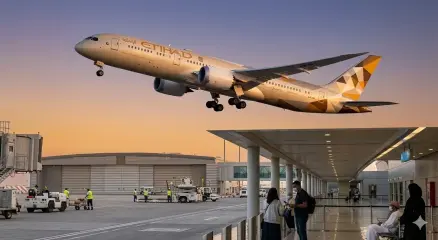
Abu Dhabi — March 6, 2026 Partial Operations Restart After Week-Long Shutdown Etihad Airways has partially resumed commercial operations from Abu Dhabi International Airport, marking the first significant return to scheduled service after nearly a week of complete shutdown triggered by the escalating conflict between Iran, Israel, and the United States. 25 Destinations Back on the Map The UAE's flag carrier confirmed it will operate a limited schedule between March 6 and March 19, serving 25 international destinations across Europe, Asia, the Middle East, and the United States. Routes include London Heathrow, Frankfurt, Madrid, Milan, New York, Delhi, Mumbai, Bangkok, Kuala Lumpur, Cairo, and Jeddah, among others. The airline stressed that all remaining scheduled services stay suspended, and that flights will only operate once all safety criteria are fully met. GCAA Green-Lights Exceptional Operations The resumption follows approval from the UAE's General Civil Aviation Authority (GCAA), which cleared "exceptional" flight operations across Abu Dhabi, Dubai, and Sharjah airports to assist stranded passengers. The GCAA had previously confirmed that 17,498 passengers were returned on 60 repatriation flights, with plans to scale to 80 flights per day in the next phase. Passengers Advised Not to Head to Airport Without Confirmation Etihad urged travellers not to proceed to the airport unless directly contacted by the airline or holding a confirmed booking on a resumed flight. Due to high call volumes, the airline has directed passengers to manage rebookings and refund requests through etihad.com. Free Rebooking and Refunds Available Passengers holding Etihad tickets issued on or before February 28, 2026 — with original travel dates up to March 21 — may rebook free of charge on any Etihad-operated flight until May 15, 2026. Full refunds are also available via etihad.com. Emirates and flydubai Also Restarting Fellow UAE carriers Emirates and flydubai have begun phased resumptions in parallel. Emirates announced over 100 daily departures on March 5 and 6, while flydubai resumed select scheduled routes from March 5, signalling a broader, cautious return to normalcy across the UAE's aviation sector. Situation Remains Fluid Despite the partial restart, airspace conditions across the region remain subject to rapid change as missile activity continues. Passengers are strongly advised to monitor official airline channels before travelling.
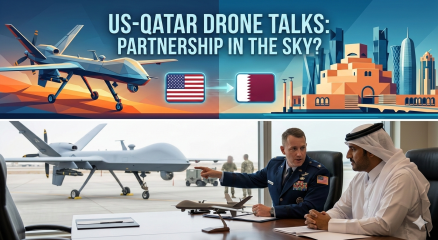
The United States and Qatar are in early-stage discussions with Kyiv about acquiring Ukrainian-made interceptor drones as a cost-effective alternative to counter the waves of Iranian Shahed UAVs targeting Gulf states, according to sources familiar with the matter. The talks are taking place between government officials — not private companies — and the technology under discussion includes systems designed to detect incoming enemy drones and disrupt their communication signals. Qatar's International Media Office did not respond to a request for comment, and the Pentagon declined to address the matter publicly. A Ukrainian delegation traveled to Doha this week to meet with Qatari officials and share Ukraine's experience in drone defense, according to a Western diplomat based in the Gulf. A separate delegation also visited Abu Dhabi for similar discussions. Ukrainian President Volodymyr Zelenskyy confirmed that Washington had formally requested Kyiv's assistance in countering Shahed drones, stating he had "instructed that the necessary resources be provided and that Ukrainian specialists be present." The urgency of the talks stems from an acute cost imbalance on the battlefield. A single Iranian Shahed drone costs approximately $30,000 to produce, while a PAC-3 Patriot interceptor missile — the primary defense currently deployed by Gulf states — costs over $13.5 million per unit. Since the U.S.-Israeli strikes on Iran began, Gulf nations have expended hundreds of these high-value missiles, and stockpiles are diminishing. By contrast, Ukraine has pioneered mass-produced interceptor drones costing only a few thousand dollars each, honed through four years of countering Russian Shahed swarm attacks. Britain is also playing a supporting role, with a third source indicating London is backing Ukraine in its early-stage talks with Gulf partners. Some interceptor drones could potentially be supplied through Project Octopus, an existing joint drone production venture between the United Kingdom and Ukraine, though the manufacturer declined to comment. Zelenskyy, who confirmed he had spoken with leaders of Qatar, the UAE, Bahrain, Jordan, and Kuwait, framed Ukraine's cooperation as conditional — stressing that any technology transfer must not compromise Ukraine's own defense capabilities. He has also reportedly proposed offering Kyiv's drone expertise to Gulf leaders in exchange for their diplomatic influence in securing a ceasefire with Russia. Operational challenges remain. A representative from Come Back Alive, a Ukrainian foundation that has procured tens of thousands of interceptor drones, cautioned that it would be difficult to redeploy trained Ukrainian operators to the Middle East given frontline demands at home, noting a significant need to scale up training for partner nations. Source: Reuters
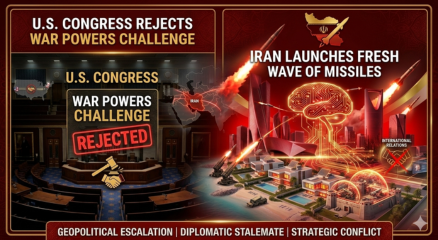
Iran escalated its retaliatory campaign on Thursday, unleashing a renewed barrage of missiles and drones across the Persian Gulf region, as the United States Congress voted to continue supporting the Trump administration's military offensive against Tehran without requiring prior congressional authorisation. Heavy waves of missile and drone strikes were reported across multiple Gulf states, including Azerbaijan, Saudi Arabia, and the United Arab Emirates, as Iran intensified retaliatory operations that had appeared to ease in recent days. The fresh assault came as the U.S. House of Representatives rejected a bipartisan measure intended to halt further American military action in Iran, voting 219–212 against the bill. A day earlier, the Senate voted 47 to 53 to defeat a resolution that would have required President Donald Trump to seek congressional approval before continuing military operations against Iran. The conflict began on February 28, when Israel and the United States launched coordinated strikes on Iranian cities including Tehran, Isfahan, Qom, Karaj, and Kermanshah — the largest combat operation in Israeli Air Force history — targeting senior officials, military infrastructure, and nuclear facilities. Among those killed was Supreme Leader Ali Khamenei. Since hostilities began, Iran has launched more than 500 ballistic missiles and nearly 2,000 drones, targeting U.S. military facilities across nine countries as well as sites inside Israel. The volume of Iran's missile and drone launches has dropped significantly — by 86% and 73% respectively — since the first day of the war, according to top U.S. General Dan Caine, suggesting that joint strikes on Iranian missile launchers are having a measurable effect. The conflict has also spread to Lebanon, where Israeli forces carried out strikes on Beirut's southern suburbs on Thursday, warning residents to evacuate. At least 102 people have been killed in Lebanon since Hezbollah entered the war. Domestically, the war has sparked intense political debate, with Democrats questioning Trump's decision to strike Iran without congressional approval. U.S. officials have put forward shifting justifications for the offensive, including preventing Iran from developing a nuclear weapon — a claim the UN's nuclear watchdog disputed, stating Iran was not days or weeks away from possessing atomic weapons. Defense Secretary Pete Hegseth confirmed that the U.S. military sank an Iranian warship in the Indian Ocean — the first time a U.S. submarine has fired a torpedo in combat since World War II. Iran's foreign minister warned Washington it would "bitterly regret" the strike. The conflict, now entering its sixth day, shows no immediate sign of ceasefire, with U.S. military commanders stating operations remain in their "early days."