
President's Latest Speech Sets a Two-Track Message
Iranian President Masoud Pezeshkian delivered a firm and defiant address this week, declaring that Iran will never surrender to foreign pressure — even as he simultaneously sought to reassure neighboring Gulf states that they are not targets of Iranian military action. The speech carried a dual message: strength toward adversaries, and restraint toward regional neighbors.
Speaking amid one of the most serious military crises the Middle East has witnessed in years, Pezeshkian stated clearly that he had instructed the Iranian military not to strike any country that was not itself attacking Iran. The declaration was seen as a direct effort to prevent the conflict from widening into a full-scale regional war.
A Region on the Edge
The president's speech came against a backdrop of extraordinary political and military upheaval inside Iran. The country's leadership structure has been severely shaken following the deaths of several senior security and military officials, forcing the establishment of a transitional constitutional council to manage state affairs during the crisis. The council, composed of senior governmental and judicial figures, has taken on interim responsibilities as Iran works to stabilize its chain of command.
Despite the turmoil, Iranian officials have projected a posture of continued resilience, insisting that the country's military and governing institutions remain functional and capable of defending national sovereignty.
Iran Distances Itself from Gulf Strikes
Senior Iranian officials moved quickly to address concerns among Gulf Cooperation Council nations, many of whom have been alarmed by the scale and unpredictability of recent regional hostilities. Iran's foreign minister held direct communications with counterparts across the Gulf, stressing that neighboring countries are not deliberate targets of Iranian operations.
The clarification was significant. Several Gulf states reported incidents involving missile debris and intercepted projectiles over their territories, raising fears that the conflict could draw neutral nations into open confrontation. Iranian leadership described these incidents as unintentional and reiterated its policy of restraint toward non-combatant neighbors.
Gulf States Remain on High Alert
Despite Tehran's assurances, Gulf nations have not stood down from heightened security postures. Air defense systems across the region remain active, and several countries have lodged formal diplomatic concerns over the safety of their airspace and civilian populations. The United Arab Emirates reported intercepting incoming projectiles, with at least one incident resulting in civilian casualties from falling debris.
Saudi Arabia, Kuwait, Bahrain, and Qatar have all called for immediate de-escalation, urging Iran and all parties involved to return to diplomatic channels before the situation spirals further out of control.
International Calls for Ceasefire
The United Nations and European Union have issued urgent appeals for all sides to halt military operations and pursue negotiations. Diplomatic back-channels remain active, though no formal ceasefire framework has yet been agreed upon. Analysts warn that without a structured diplomatic process, the risk of miscalculation — and unintended escalation involving Gulf states — remains dangerously high.
For now, the region holds its breath as Iran's leadership attempts to wage a confined conflict while keeping its neighbors out of the fire.
Read Also- U.S. and Qatar in Talks to Acquire Ukrainian Interceptor Drones to Counter Iranian Shahed Attacks
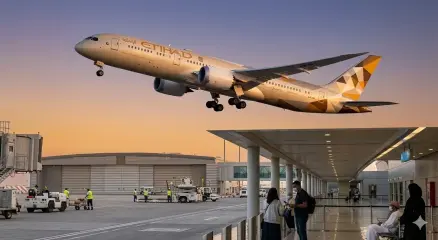
Abu Dhabi — March 6, 2026 Partial Operations Restart After Week-Long Shutdown Etihad Airways has partially resumed commercial operations from Abu Dhabi International Airport, marking the first significant return to scheduled service after nearly a week of complete shutdown triggered by the escalating conflict between Iran, Israel, and the United States. 25 Destinations Back on the Map The UAE's flag carrier confirmed it will operate a limited schedule between March 6 and March 19, serving 25 international destinations across Europe, Asia, the Middle East, and the United States. Routes include London Heathrow, Frankfurt, Madrid, Milan, New York, Delhi, Mumbai, Bangkok, Kuala Lumpur, Cairo, and Jeddah, among others. The airline stressed that all remaining scheduled services stay suspended, and that flights will only operate once all safety criteria are fully met. GCAA Green-Lights Exceptional Operations The resumption follows approval from the UAE's General Civil Aviation Authority (GCAA), which cleared "exceptional" flight operations across Abu Dhabi, Dubai, and Sharjah airports to assist stranded passengers. The GCAA had previously confirmed that 17,498 passengers were returned on 60 repatriation flights, with plans to scale to 80 flights per day in the next phase. Passengers Advised Not to Head to Airport Without Confirmation Etihad urged travellers not to proceed to the airport unless directly contacted by the airline or holding a confirmed booking on a resumed flight. Due to high call volumes, the airline has directed passengers to manage rebookings and refund requests through etihad.com. Free Rebooking and Refunds Available Passengers holding Etihad tickets issued on or before February 28, 2026 — with original travel dates up to March 21 — may rebook free of charge on any Etihad-operated flight until May 15, 2026. Full refunds are also available via etihad.com. Emirates and flydubai Also Restarting Fellow UAE carriers Emirates and flydubai have begun phased resumptions in parallel. Emirates announced over 100 daily departures on March 5 and 6, while flydubai resumed select scheduled routes from March 5, signalling a broader, cautious return to normalcy across the UAE's aviation sector. Situation Remains Fluid Despite the partial restart, airspace conditions across the region remain subject to rapid change as missile activity continues. Passengers are strongly advised to monitor official airline channels before travelling.
The United States and Qatar are in early-stage discussions with Kyiv about acquiring Ukrainian-made interceptor drones as a cost-effective alternative to counter the waves of Iranian Shahed UAVs targeting Gulf states, according to sources familiar with the matter. The talks are taking place between government officials — not private companies — and the technology under discussion includes systems designed to detect incoming enemy drones and disrupt their communication signals. Qatar's International Media Office did not respond to a request for comment, and the Pentagon declined to address the matter publicly. A Ukrainian delegation traveled to Doha this week to meet with Qatari officials and share Ukraine's experience in drone defense, according to a Western diplomat based in the Gulf. A separate delegation also visited Abu Dhabi for similar discussions. Ukrainian President Volodymyr Zelenskyy confirmed that Washington had formally requested Kyiv's assistance in countering Shahed drones, stating he had "instructed that the necessary resources be provided and that Ukrainian specialists be present." The urgency of the talks stems from an acute cost imbalance on the battlefield. A single Iranian Shahed drone costs approximately $30,000 to produce, while a PAC-3 Patriot interceptor missile — the primary defense currently deployed by Gulf states — costs over $13.5 million per unit. Since the U.S.-Israeli strikes on Iran began, Gulf nations have expended hundreds of these high-value missiles, and stockpiles are diminishing. By contrast, Ukraine has pioneered mass-produced interceptor drones costing only a few thousand dollars each, honed through four years of countering Russian Shahed swarm attacks. Britain is also playing a supporting role, with a third source indicating London is backing Ukraine in its early-stage talks with Gulf partners. Some interceptor drones could potentially be supplied through Project Octopus, an existing joint drone production venture between the United Kingdom and Ukraine, though the manufacturer declined to comment. Zelenskyy, who confirmed he had spoken with leaders of Qatar, the UAE, Bahrain, Jordan, and Kuwait, framed Ukraine's cooperation as conditional — stressing that any technology transfer must not compromise Ukraine's own defense capabilities. He has also reportedly proposed offering Kyiv's drone expertise to Gulf leaders in exchange for their diplomatic influence in securing a ceasefire with Russia. Operational challenges remain. A representative from Come Back Alive, a Ukrainian foundation that has procured tens of thousands of interceptor drones, cautioned that it would be difficult to redeploy trained Ukrainian operators to the Middle East given frontline demands at home, noting a significant need to scale up training for partner nations. Source: Reuters
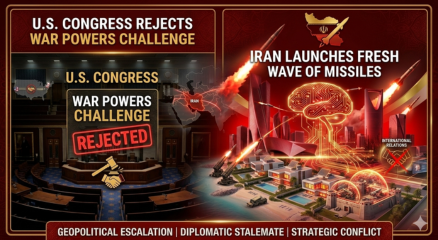
Iran escalated its retaliatory campaign on Thursday, unleashing a renewed barrage of missiles and drones across the Persian Gulf region, as the United States Congress voted to continue supporting the Trump administration's military offensive against Tehran without requiring prior congressional authorisation. Heavy waves of missile and drone strikes were reported across multiple Gulf states, including Azerbaijan, Saudi Arabia, and the United Arab Emirates, as Iran intensified retaliatory operations that had appeared to ease in recent days. The fresh assault came as the U.S. House of Representatives rejected a bipartisan measure intended to halt further American military action in Iran, voting 219–212 against the bill. A day earlier, the Senate voted 47 to 53 to defeat a resolution that would have required President Donald Trump to seek congressional approval before continuing military operations against Iran. The conflict began on February 28, when Israel and the United States launched coordinated strikes on Iranian cities including Tehran, Isfahan, Qom, Karaj, and Kermanshah — the largest combat operation in Israeli Air Force history — targeting senior officials, military infrastructure, and nuclear facilities. Among those killed was Supreme Leader Ali Khamenei. Since hostilities began, Iran has launched more than 500 ballistic missiles and nearly 2,000 drones, targeting U.S. military facilities across nine countries as well as sites inside Israel. The volume of Iran's missile and drone launches has dropped significantly — by 86% and 73% respectively — since the first day of the war, according to top U.S. General Dan Caine, suggesting that joint strikes on Iranian missile launchers are having a measurable effect. The conflict has also spread to Lebanon, where Israeli forces carried out strikes on Beirut's southern suburbs on Thursday, warning residents to evacuate. At least 102 people have been killed in Lebanon since Hezbollah entered the war. Domestically, the war has sparked intense political debate, with Democrats questioning Trump's decision to strike Iran without congressional approval. U.S. officials have put forward shifting justifications for the offensive, including preventing Iran from developing a nuclear weapon — a claim the UN's nuclear watchdog disputed, stating Iran was not days or weeks away from possessing atomic weapons. Defense Secretary Pete Hegseth confirmed that the U.S. military sank an Iranian warship in the Indian Ocean — the first time a U.S. submarine has fired a torpedo in combat since World War II. Iran's foreign minister warned Washington it would "bitterly regret" the strike. The conflict, now entering its sixth day, shows no immediate sign of ceasefire, with U.S. military commanders stating operations remain in their "early days."
President's Latest Speech Sets a Two-Track Message Iranian President Masoud Pezeshkian delivered a firm and defiant address this week, declaring that Iran will never surrender to foreign pressure — even as he simultaneously sought to reassure neighboring Gulf states that they are not targets of Iranian military action. The speech carried a dual message: strength toward adversaries, and restraint toward regional neighbors. Speaking amid one of the most serious military crises the Middle East has witnessed in years, Pezeshkian stated clearly that he had instructed the Iranian military not to strike any country that was not itself attacking Iran. The declaration was seen as a direct effort to prevent the conflict from widening into a full-scale regional war. A Region on the Edge The president's speech came against a backdrop of extraordinary political and military upheaval inside Iran. The country's leadership structure has been severely shaken following the deaths of several senior security and military officials, forcing the establishment of a transitional constitutional council to manage state affairs during the crisis. The council, composed of senior governmental and judicial figures, has taken on interim responsibilities as Iran works to stabilize its chain of command. Despite the turmoil, Iranian officials have projected a posture of continued resilience, insisting that the country's military and governing institutions remain functional and capable of defending national sovereignty. Iran Distances Itself from Gulf Strikes Senior Iranian officials moved quickly to address concerns among Gulf Cooperation Council nations, many of whom have been alarmed by the scale and unpredictability of recent regional hostilities. Iran's foreign minister held direct communications with counterparts across the Gulf, stressing that neighboring countries are not deliberate targets of Iranian operations. The clarification was significant. Several Gulf states reported incidents involving missile debris and intercepted projectiles over their territories, raising fears that the conflict could draw neutral nations into open confrontation. Iranian leadership described these incidents as unintentional and reiterated its policy of restraint toward non-combatant neighbors. Gulf States Remain on High Alert Despite Tehran's assurances, Gulf nations have not stood down from heightened security postures. Air defense systems across the region remain active, and several countries have lodged formal diplomatic concerns over the safety of their airspace and civilian populations. The United Arab Emirates reported intercepting incoming projectiles, with at least one incident resulting in civilian casualties from falling debris. Saudi Arabia, Kuwait, Bahrain, and Qatar have all called for immediate de-escalation, urging Iran and all parties involved to return to diplomatic channels before the situation spirals further out of control. International Calls for Ceasefire The United Nations and European Union have issued urgent appeals for all sides to halt military operations and pursue negotiations. Diplomatic back-channels remain active, though no formal ceasefire framework has yet been agreed upon. Analysts warn that without a structured diplomatic process, the risk of miscalculation — and unintended escalation involving Gulf states — remains dangerously high. For now, the region holds its breath as Iran's leadership attempts to wage a confined conflict while keeping its neighbors out of the fire. Read Also- U.S. and Qatar in Talks to Acquire Ukrainian Interceptor Drones to Counter Iranian Shahed Attacks
La Liga, Matchday 27 | Estadio Balaídos, Vigo, Spain | March 6, 2026 Real Madrid snatched a vital three points from the jaws of a draw as Federico Valverde's deflected shot in the fourth minute of stoppage time secured a 2-1 victory over Celta Vigo at Estadio Balaídos. The result, on Friday night, cuts the gap to La Liga leaders Barcelona to just one point ahead of their own fixture the following day. Tchouaméni Opens the Scoring — Celta Hit Back Before the Break Aurelien Tchouaméni gave the visitors an early lead in the 11th minute, converting a corner delivered by Trent Alexander-Arnold and assisted by Arda Güler. Real Madrid, arriving on the back of back-to-back La Liga defeats — at Osasuna and a damaging home loss to Getafe — needed nothing short of a response, and they looked briefly on track. Celta, however, showed exactly why they sit sixth in the table and had won four consecutive matches across all competitions coming into the game. Striker Borja Iglesias — returning from suspension and with 14 goals already to his name this season — levelled matters on the 25-minute mark, thrilling the 22,048 supporters inside Balaídos and sending the teams into the interval locked at 1-1. A Tense Second Half Dominated by Defensive Resolve The second period was a cagey affair. Real Madrid dominated possession — finishing with 63.3% — and peppered the Celta goal with 14 shot attempts, yet found Celta's backline and keeper Ionuț Radu in stubborn form. Celta captain Iago Aspas, introduced in the second half, came agonisingly close when his effort rattled the post on the counter-attack, threatening to send the home side ahead. Real head coach Álvaro Arbeloa — who replaced Xabi Alonso in January — had repeatedly stressed ahead of the match that only victory mattered, citing a squad depleted by injuries to Kylian Mbappé, Jude Bellingham, Rodrygo, Eder Militão, and Eduardo Camavinga. His men found a way, eventually. Valverde Delivers When It Matters Most With the clock deep into added time and a draw looking increasingly likely, Valverde picked up the ball on the edge of the Celta box. His strike took a heavy deflection off a defender and looped past the helpless goalkeeper in the 94th minute — a fortunate but fully deserved winner that sparked wild celebrations from the Madrid bench. It was a moment that underlined why the Uruguayan midfielder — rated 8.5 by FotMob on the night — remains one of Real Madrid's most dependable match-winners even in a season ravaged by the club's injury crisis. La Liga Title Race Tightens Ahead of a Pivotal Weekend The win moves Real Madrid to 63 points from 27 games, tightening the title race with Barcelona — who travel to Athletic Bilbao on Saturday — to a single point. Arbeloa had been defiant during his pre-match press conference: "We're four points behind, not 18. This is Real Madrid. As long as we can mathematically fight, we will." That resolve was rewarded in dramatic fashion. Attention now turns to the Bernabéu, where Madrid host Manchester City in the first leg of their UEFA Champions League round-of-16 tie — a contest Arbeloa's side will enter on the back of a morale-boosting, if nervy, night in Galicia. Match Facts Result: Celta Vigo 1–2 Real Madrid | Venue: Estadio Balaídos, Vigo | Attendance: 22,048 Goals: Tchouaméni 11' (RMA), Iglesias 25' (CEL), Valverde 90'+4 (RMA) Possession: Celta Vigo 36.7% | Real Madrid 63.3% Shot Attempts: Celta Vigo 8 | Real Madrid 14 Yellow Cards: Celta Vigo 1 | Real Madrid 2 | Corners: 1–6 La Liga Table (after MD27): Barcelona — 64 pts | Real Madrid — 63 pts
President's Latest Speech Sets a Two-Track Message Iranian President Masoud Pezeshkian delivered a firm and defiant address this week, declaring that Iran will never surrender to foreign pressure — even as he simultaneously sought to reassure neighboring Gulf states that they are not targets of Iranian military action. The speech carried a dual message: strength toward adversaries, and restraint toward regional neighbors. Speaking amid one of the most serious military crises the Middle East has witnessed in years, Pezeshkian stated clearly that he had instructed the Iranian military not to strike any country that was not itself attacking Iran. The declaration was seen as a direct effort to prevent the conflict from widening into a full-scale regional war. A Region on the Edge The president's speech came against a backdrop of extraordinary political and military upheaval inside Iran. The country's leadership structure has been severely shaken following the deaths of several senior security and military officials, forcing the establishment of a transitional constitutional council to manage state affairs during the crisis. The council, composed of senior governmental and judicial figures, has taken on interim responsibilities as Iran works to stabilize its chain of command. Despite the turmoil, Iranian officials have projected a posture of continued resilience, insisting that the country's military and governing institutions remain functional and capable of defending national sovereignty. Iran Distances Itself from Gulf Strikes Senior Iranian officials moved quickly to address concerns among Gulf Cooperation Council nations, many of whom have been alarmed by the scale and unpredictability of recent regional hostilities. Iran's foreign minister held direct communications with counterparts across the Gulf, stressing that neighboring countries are not deliberate targets of Iranian operations. The clarification was significant. Several Gulf states reported incidents involving missile debris and intercepted projectiles over their territories, raising fears that the conflict could draw neutral nations into open confrontation. Iranian leadership described these incidents as unintentional and reiterated its policy of restraint toward non-combatant neighbors. Gulf States Remain on High Alert Despite Tehran's assurances, Gulf nations have not stood down from heightened security postures. Air defense systems across the region remain active, and several countries have lodged formal diplomatic concerns over the safety of their airspace and civilian populations. The United Arab Emirates reported intercepting incoming projectiles, with at least one incident resulting in civilian casualties from falling debris. Saudi Arabia, Kuwait, Bahrain, and Qatar have all called for immediate de-escalation, urging Iran and all parties involved to return to diplomatic channels before the situation spirals further out of control. International Calls for Ceasefire The United Nations and European Union have issued urgent appeals for all sides to halt military operations and pursue negotiations. Diplomatic back-channels remain active, though no formal ceasefire framework has yet been agreed upon. Analysts warn that without a structured diplomatic process, the risk of miscalculation — and unintended escalation involving Gulf states — remains dangerously high. For now, the region holds its breath as Iran's leadership attempts to wage a confined conflict while keeping its neighbors out of the fire. Read Also- U.S. and Qatar in Talks to Acquire Ukrainian Interceptor Drones to Counter Iranian Shahed Attacks